
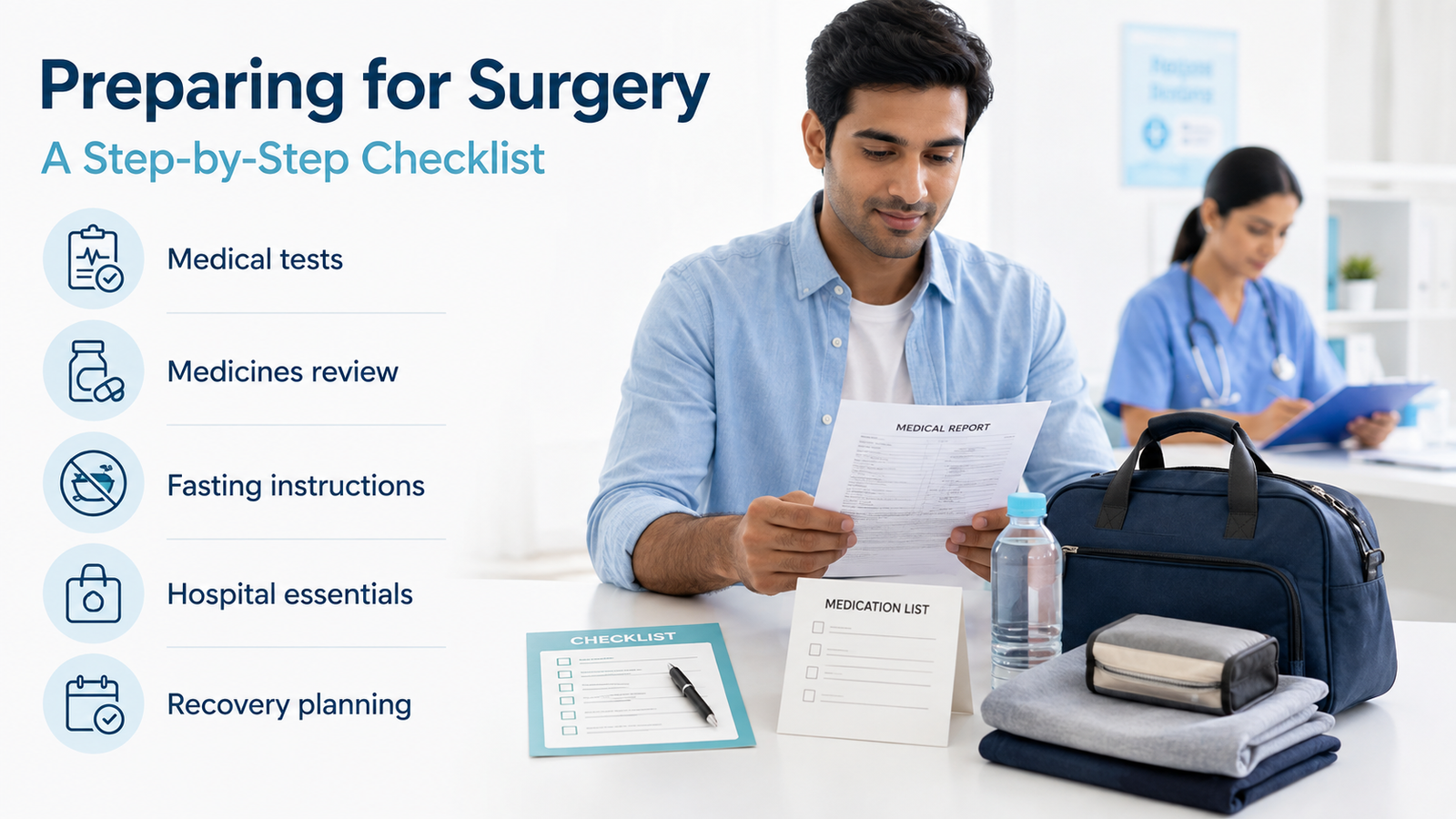
How to prepare for surgery: Complete your prescribed medical tests, discuss your medicines and health conditions with your surgical team, follow individual fasting instructions, arrange transportation, and prepare your home for recovery. During the week before surgery, confirm your admission details, required documents, and postoperative care plan. Never stop prescribed medicines or change fasting instructions without medical advice.
Preparing properly for an operation can make your surgical journey more organised, from hospital admission to recovery.
Whether you are undergoing hernia surgery, gallbladder surgery, an anorectal procedure or another planned operation, preparation should follow the instructions provided by your surgeon and anaesthesia team.
This guide explains how to prepare for surgery using a practical checklist for the week before your operation, the night before surgery and the day of admission.
How to Prepare for Surgery: Quick Checklist
Surgery preparation involves medical assessment, medicine review, fasting instructions, hospital arrangements, and recovery planning.
Use this checklist before your scheduled procedure:
- Confirm your surgery date, hospital, and admission time.
- Complete all prescribed blood tests, ECG, or imaging.
- Share your medical history and allergies.
- Review prescription medicines and supplements.
- Confirm which medicines to continue, adjust, or temporarily stop.
- Follow the prescribed diet and fasting instructions.
- Arrange transportation home.
- Prepare identification, reports and hospital documents.
- Organise help at home if required.
- Understand postoperative medicines, wound care and activity restrictions.
- Inform your surgeon about any new illness or symptoms.
Important: This checklist supports your preparation but does not replace the instructions provided by your hospital.
What Should You Do One Week Before Surgery?
One week before surgery, complete your medical preparations, confirm your treatment plan, and arrange practical support for recovery.
Your surgeon may recommend investigations based on the type of operation, your age, and your medical history.
During this period:
- Complete the recommended tests.
- Attend your preoperative appointments.
- Confirm your admission date and time.
- Discuss all medicines and supplements.
- Ask about fasting requirements.
- Arrange transportation and home assistance.
- Review expected recovery restrictions.
If you have diabetes, high blood pressure, heart disease, kidney problems, or another medical condition, make sure your surgical team knows about it.
Which Medical Tests Are Needed Before Surgery?
Preoperative tests depend on the planned operation, your health conditions, and the type of anaesthesia. Not every patient needs the same investigations.
Your doctor may recommend:
| Investigation | Why It May Be Requested |
|---|---|
| Complete blood count (CBC) | To assess haemoglobin and blood cell levels |
| Blood glucose or HbA1c | To evaluate diabetes or blood sugar control |
| Kidney function tests | To assess kidney function when relevant |
| Electrocardiogram (ECG) | To evaluate heart-related concerns when indicated |
| Imaging or ultrasound | To assess the surgical condition |
| Other investigations | Based on medical history and procedure |
Routine testing is not automatically necessary for every patient.
Complete only the investigations recommended by your healthcare team.
Which Medicines Should You Stop Before Surgery?
Never stop prescribed medicines without instructions from your surgeon, anaesthesiologist or prescribing doctor.
Before surgery, provide a complete list of:
- Prescription medicines
- Over-the-counter medicines
- Blood thinners
- Diabetes medicines, including insulin and injections
- Blood pressure and heart medicines
- Pain medicines
- Vitamins and herbal supplements
- Protein powders and nutritional products
Some medicines may need to be continued, while others require temporary changes.
For example, anticoagulants, antiplatelet medicines and certain diabetes medicines may require individualised planning.
The correct decision depends on your medical condition, the operation and the risk of stopping treatment.
Ask for clear written instructions whenever possible.
What Should You Eat Before Surgery?
Before surgery, focus on balanced nutrition and hydration unless your doctor recommends a specific dietary plan.
A healthy preoperative diet may include:
- Dal, paneer, curd, eggs, or other protein sources
- Rice, roti, oats, or other suitable carbohydrates
- Fruits and vegetables
- Adequate fluids
- Regular, balanced meals
Avoid extreme dieting, unnecessary fasting, or unprescribed supplements before your procedure.
For practical meal guidance, read our diet before and after surgery in India guide.
What Are the Fasting Rules Before Anaesthesia?
Follow the fasting instructions provided by your anaesthesia team exactly. The permitted timing for food and liquids depends on your procedure and medical circumstances.
Do not assume that every patient must stop eating at midnight.
Your instructions may specify different times for solid foods and permitted clear liquids.
Patients with certain medical conditions or medications may require additional precautions.
If you accidentally eat or drink during the restricted period, inform your medical team.
Do not hide this information because it can affect anaesthesia safety.
What Should You Do the Night Before Surgery?
The night before surgery, organise your documents, confirm the hospital schedule, and follow your prescribed medicine and fasting plan.
Use this checklist:
- Confirm your admission time.
- Keep all reports and prescriptions together.
- Prepare identification and insurance documents if applicable.
- Pack comfortable clothing.
- Follow bathing or skin-preparation instructions.
- Follow prescribed medicine instructions.
- Confirm when to stop eating and drinking.
- Arrange transportation.
- Get adequate rest.
Do not shave the surgical area unless your healthcare team specifically instructs you to do so.
If you develop a fever, cough, infection, or another significant illness, inform your surgeon.
What Should You Bring to the Hospital?
Bring the documents, medicine information, and personal essentials requested by your hospital.
| Category | Items to Carry |
|---|---|
| Identification | Government ID and hospital documents |
| Medical records | Previous reports, scans, and prescriptions |
| Medicine details | Updated list of medicines and allergies |
| Insurance | Policy information and approval documents if applicable |
| Clothing | Comfortable, loose-fitting clothes |
| Personal essentials | Spectacles, necessary hygiene items and other permitted essentials |
| Contact information | Emergency contact details |
Leave jewellery and unnecessary valuables at home.
Ask the hospital whether you should bring your regular medicines or medical devices.
What Should You Do on the Morning of Surgery?
On the morning of surgery, follow fasting instructions, take only approved medicines, and arrive at the hospital at the scheduled time.
Before leaving home:
- Confirm your hospital admission time.
- Follow the prescribed food and drink restrictions.
- Take only medicines approved for that morning.
- Bring your reports and documents.
- Wear comfortable clothing.
- Avoid jewellery and follow instructions about cosmetics, nail products and contact lenses.
- Inform your healthcare team about any new symptoms.
Your surgical and anaesthesia teams may review your medical information, confirm the procedure and complete safety checks before surgery.
If anything is unclear, ask questions before the operation.
How Can You Prepare Your Home for Recovery?
Preparing your home before surgery can make recovery easier and reduce unnecessary physical strain.
Keep frequently used items within easy reach.
Depending on the procedure, arrange help with:
- Meal preparation
- Household work
- Childcare
- Shopping
- Transportation
- Dressing or personal care if needed
Before discharge, make sure you understand your instructions for medicines, wound care, bathing, walking, lifting, driving, and follow-up visits.
You can learn more about wound care after surgery and the risks and benefits of laparoscopic surgery.
Can You Drive Home After Surgery?
You may need someone to take you home after surgery, particularly if you receive general anaesthesia, sedation or medicines that impair alertness.
Driving restrictions depend on your procedure, anaesthesia, pain medicines and recovery.
Arrange a responsible adult to accompany you when required.
Do not drive until your medical team confirms that it is appropriate and you can safely operate a vehicle.
When Should You Contact Your Surgeon Before Surgery?
Contact your surgical team if you develop a new illness, have concerns about medicines, or are unsure about fasting instructions.
Report:
- Fever or respiratory symptoms
- A new infection
- Significant changes in blood glucose or blood pressure
- New chest pain or breathing difficulties
- An unexpected reaction to medication
- Accidental eating or drinking during the fasting period
- Any important change in your health
Severe chest pain, major breathing difficulty, or other potentially life-threatening symptoms require emergency medical care.
After surgery, follow your discharge instructions and report concerning symptoms such as worsening pain, persistent vomiting, significant bleeding, fever, or increasing wound redness.
Preparing for Surgery With Dr. Hitesh Arora in Surat
Patients undergoing relevant general or laparoscopic procedures can consult Dr. Hitesh Arora at Arora Elite Care in Surat.
Dr. Hitesh Arora is an Advanced Laparoscopic and General Surgeon with more than 15 years of surgical experience. His professional profile lists an M.S. Gold Medal and FMAS qualification, along with experience across more than 10,000 surgical procedures.
Preoperative consultation helps patients understand their diagnosis, proposed operation, necessary investigations, preparation instructions, and expected recovery.
For personalised surgical guidance, book a surgery consultation in Surat.
Conclusion
Knowing how to prepare for surgery involves more than reaching the hospital on time.
Complete your recommended medical tests, review medicines with your healthcare team, follow fasting instructions, prepare hospital documents, and arrange recovery support.
A practical pre-surgery checklist can help you remember important tasks and prepare for your procedure with greater confidence.
Most importantly, follow the instructions provided specifically for your operation, as preparation requirements vary between patients.
Frequently Asked Questions
1. What Should I Do One Week Before Surgery?
Complete your prescribed investigations, attend preoperative appointments, review medicines and supplements with your doctor, confirm your hospital admission details, and arrange transportation. Inform your surgical team about existing medical conditions or any new illness.
2. Can I Eat or Drink Before Surgery?
Follow the exact fasting instructions provided by your surgeon and anaesthesia team. The timing for solid food and liquids varies according to the procedure, anaesthesia, and medical conditions. If you accidentally eat or drink during the restricted period, inform your medical team.
3. Which Medicines Should I Stop Before Surgery?
Do not stop prescribed medicines yourself. Blood thinners, diabetes medicines and certain other treatments may require individualised adjustments. Your surgical, anaesthesia or prescribing team should tell you which medicines to continue, change or temporarily stop.
4. What Should I Bring to the Hospital for Surgery?
Bring identification, hospital documents, medical reports, investigation results, current prescriptions, a list of medicines and allergies, and any required insurance information. Comfortable clothes and necessary personal items may also be useful.
5. Can I Go Home Alone After Surgery?
Some procedures and types of anaesthesia require a responsible adult to accompany you home. Sedation, general anaesthesia and certain pain medicines can affect alertness and coordination. Follow your hospital’s discharge instructions and arrange transportation when required.
6. What Should I Do If I Develop a Fever Before Surgery?
Inform your surgical team as soon as possible if you develop a fever, cough, infection, or another significant illness before your scheduled operation. Your doctor will assess whether the procedure can proceed safely or needs to be postponed.