
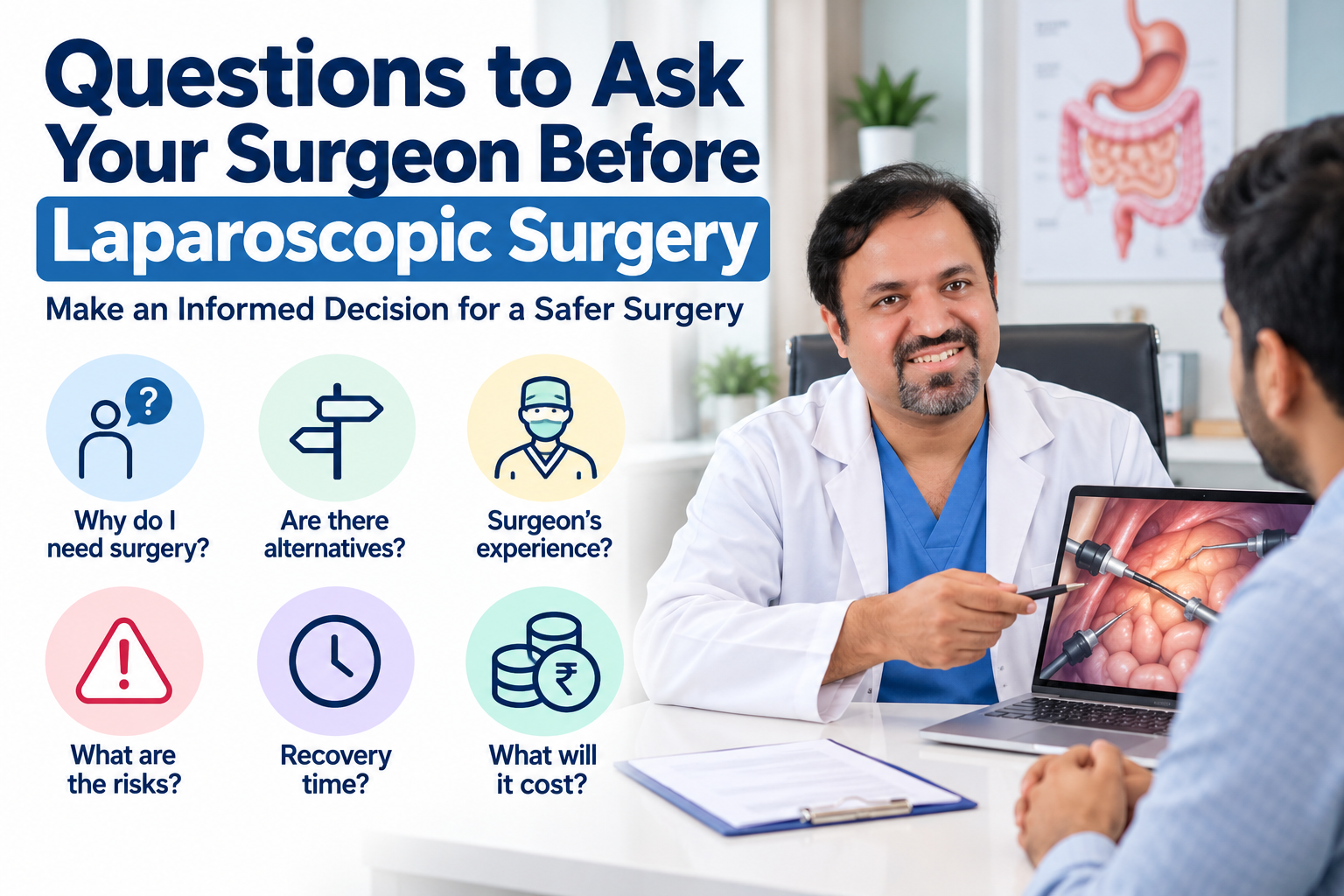
The most important questions to ask before surgery concern why you need the operation, available alternatives, the surgeon’s experience, possible risks, recovery time and expected costs. Understanding these details helps you make an informed decision and prepare for treatment.
If your doctor recommends laparoscopic surgery, you may feel concerned about anaesthesia, pain, complications or returning to work. Asking questions during your consultation can help you understand what to expect.
At Arora Elite Care, Surat, Dr. Hitesh Arora, Advanced Laparoscopic and General Surgeon, discusses surgical treatment options with patients according to their medical conditions.
This guide explains 12 important questions you can ask your surgeon before undergoing laparoscopic surgery.
Why Should You Ask Questions Before Surgery?
Asking questions helps you understand your diagnosis, the purpose of surgery and the potential benefits and risks.
A surgical consultation should give you enough information to make a voluntary, informed decision.
You should understand:
- Why the doctor recommends surgery
- Whether other treatments are available
- What could happen if you delay the operation
- Which complications may occur
- How long recovery may take
- What support you may need at home
You can bring a family member to the consultation, take notes and request clarification whenever something remains unclear.
12 Important Questions to Ask Before Surgery
1. Why Do I Need This Surgery?
Start by asking your surgeon to explain your diagnosis and why an operation may help.
Some conditions require surgery to prevent complications, while others allow patients to consider different treatment approaches.
Ask whether the operation aims to relieve symptoms, prevent complications, correct an anatomical problem or address another medical concern.
Understanding the purpose of surgery helps you evaluate its expected benefits.
2. Are There Alternatives to Surgery?
Not every medical condition requires immediate surgical treatment.
Depending on your diagnosis, alternatives may include:
- Medicines
- Lifestyle changes
- Observation and follow-up
- Non-surgical procedures
- Delaying surgery when medically safe
Ask your surgeon to explain the benefits and limitations of each option.
For some conditions, surgery may offer the most appropriate treatment. For others, observation may be reasonable.
3. What Happens If I Delay the Operation?
Ask whether postponing surgery could increase your risk of complications.
For example, certain hernias may remain stable for a period, while others can cause pain or develop complications.
Symptomatic gallstones may also lead to recurrent attacks or complications.
The urgency depends on your specific condition.
Your surgeon should explain whether you can safely take time to consider your options.
4. Why Do You Recommend Laparoscopic Surgery?
Laparoscopic surgery uses a camera and specialised instruments through small incisions.
For suitable patients and procedures, potential advantages may include:
- Smaller incisions
- Less postoperative discomfort
- Shorter hospital stay
- Earlier return to some daily activities
- Smaller visible scars
However, laparoscopic surgery is not appropriate for every patient.
Ask why your surgeon recommends this technique instead of an open operation.
5. How Much Experience Do You Have With This Procedure?
Choosing a surgeon involves understanding their qualifications, training and experience with the operation you need.
You can ask:
- How often do you perform this procedure?
- What training do you have in this surgical technique?
- What complications can occur?
- How does your team manage unexpected problems?
A surgeon’s experience matters, but it does not eliminate surgical risks.
You can review the professional background of Dr. Hitesh Arora before your consultation.
6. What Are the Possible Risks and Complications?
Every surgical procedure carries some risk.
Possible complications depend on the operation but may include:
- Bleeding
- Infection
- Anaesthesia-related problems
- Injury to surrounding structures
- Blood clots
- Delayed wound healing
- Need for additional treatment
Ask your surgeon which complications are most relevant to your procedure and medical history.
You should also understand how the surgical team plans to reduce and manage these risks.
7. Which Type of Anaesthesia Will I Need?
Some procedures require general anaesthesia, while others may allow local or regional anaesthesia.
General anaesthesia is common for laparoscopic abdominal surgery.
Ask the anaesthesiologist:
- Which anaesthesia technique do you recommend?
- Will I remain unconscious?
- What side effects may occur?
- When can I eat and drink afterward?
- Will I need someone to take me home?
Tell the medical team about allergies, previous anaesthesia problems and all medicines you take.
8. How Should I Prepare Before Surgery?
Preparation depends on your health and the planned operation.
Your surgeon may recommend blood tests, imaging or other investigations.
Ask about:
- Fasting instructions
- Regular medicines
- Blood thinners
- Diabetes medicines
- Smoking and alcohol
- Personal hygiene
- Hospital admission arrangements
Do not stop prescribed medicines without medical guidance.
9. How Long Will I Stay in the Hospital?
Some laparoscopic operations allow same-day discharge, while others require an overnight stay or longer admission.
The expected stay depends on the procedure, anaesthesia, recovery, and medical conditions.
Ask what requirements you must meet before going home.
Also clarify whether you will need assistance during the first 24 hours after discharge.
10. How Long Will Recovery Take?
Recovery time is one of the most practical questions to ask before surgery.
Ask when you can safely:
- Walk
- Climb stairs
- Drive
- Return to desk work
- Resume physical work
- Exercise
- Lift heavy objects
- Travel
Recovery varies between procedures and patients.
Do not assume that small laparoscopic incisions mean the internal tissues have completely healed.
Your surgeon should explain the restrictions relevant to your operation.
11. What Will the Surgery Cost?
Ask for a written estimate of the expected treatment expenses.
The estimate may include:
- Surgeon and anaesthesia fees
- Hospital and operating room charges
- Investigations
- Medicines and consumables
- Room charges
- Follow-up care
Also ask whether the estimate includes potential additional costs if complications or unexpected treatment needs arise.
If you have health insurance, confirm coverage, exclusions and pre-authorisation requirements with your insurer and hospital.
12. What Follow-Up Care Will I Need?
Follow-up care helps the surgical team monitor healing and identify complications.
Ask your surgeon:
- When should I return for a review?
- Will I need dressing changes?
- When will the team remove stitches, if necessary?
- Which symptoms require urgent attention?
- Whom should I contact if problems develop after discharge?
Request written discharge instructions so you can review them at home.
Should You Get a Second Opinion Before Surgery?
A second opinion before surgery can help you understand your diagnosis, compare treatment options and feel more confident about your decision.
You may consider another consultation when:
- You do not fully understand why surgery is necessary.
- Different doctors recommend different treatments.
- The operation is complex or carries significant risks.
- You want to understand alternatives.
- You remain uncertain after your initial consultation.
A second opinion does not necessarily mean your first surgeon made an incorrect recommendation.
Another qualified specialist may confirm the original treatment plan or suggest an alternative.
However, do not delay urgent treatment to obtain another opinion without discussing the risks.
How to Choose the Right Laparoscopic Surgeon
Choosing a surgeon involves more than comparing treatment costs or reading online reviews.
Consider the following factors.
Qualifications and Training
Check the surgeon’s relevant medical qualifications and surgical training.
Experience With Your Procedure
Ask whether the surgeon regularly performs the operation you need.
Clear Communication
A surgeon should explain the diagnosis, treatment options, and possible complications in understandable language.
Hospital Facilities
Ask about anaesthesia support, postoperative monitoring, and arrangements for managing emergencies.
Follow-Up Support
Understand how the medical team handles postoperative concerns and follow-up appointments.
For additional patient education, read our guide to surgical myths and facts.
What Should You Bring to Your Surgery Consultation?
Prepare a few documents and questions before visiting the surgeon.
Bring:
- Previous medical reports
- Blood test results
- Ultrasound, CT or MRI reports, if available
- A list of current medicines
- Details of allergies
- Information about previous operations
- Relevant insurance documents
- A written list of questions
You can also bring a trusted family member who can help you remember the discussion.
Laparoscopic Surgery Consultation in Surat
Patients considering laparoscopic surgery can consult Dr. Hitesh Arora, Advanced Laparoscopic and General Surgeon, at Arora Elite Care, Surat.
During the consultation, the surgeon can review your symptoms, examine relevant reports and discuss available treatment options.
Patients can ask about the proposed procedure, expected benefits, risks, recovery, and follow-up care before deciding.
Clinic: Arora Elite Care
Address: Solaris Kode 202–203, VIP Road, Surat, Gujarat 395007
Contact Arora Elite Care to arrange a surgical consultation.
Frequently Asked Questions
1. What Are the Most Important Questions to Ask Before Surgery?
Ask why you need the operation, whether alternatives exist, what risks you face, how much recovery time you need and what the treatment may cost. Also discuss your surgeon’s experience and postoperative care.
2. Is It Okay to Ask a Surgeon About Their Experience?
Yes. Patients can ask about a surgeon’s qualifications, training and experience with a particular procedure. These questions can help patients make informed treatment decisions.
3. Should I Get a Second Opinion Before Surgery?
A second opinion can help when you feel uncertain about the diagnosis, treatment options or proposed procedure. However, avoid delaying urgent treatment without medical advice.
4. What Should I Ask About Laparoscopic Surgery Recovery?
Ask when you can return to work, drive, exercise, lift heavy objects and resume normal activities. Your surgeon should explain restrictions according to your procedure and recovery progress.
5. Can I Refuse Surgery After a Consultation?
Patients generally have the right to accept or refuse treatment after receiving appropriate information, subject to applicable legal and emergency circumstances. Ask your doctor about the potential consequences of declining or delaying surgery.
6. Can I Bring a Family Member to My Surgery Consultation?
Yes. You can usually bring a trusted family member or caregiver to help you understand the discussion and remember important instructions, subject to clinic policies and your preferences.
Conclusion
Preparing questions before surgery helps patients understand their treatment options, possible risks, and recovery expectations.
A surgical consultation should provide clear information about the proposed operation and allow patients to discuss concerns.
Before undergoing laparoscopic surgery, ask about the surgeon’s experience, anaesthesia, recovery time, treatment costs, and follow-up care.
Making an informed decision is an important part of safe surgical planning.