After gallbladder removal, bile flows continuously into the intestine instead of being stored in the gallbladder. Larger or high-fat meals may cause digestive symptoms in some people, particularly during early recovery. For the first week, choose small, low-fat meals. Gallbladder removal, medically called cholecystectomy, is commonly performed for symptomatic gallstones and other gallbladder problems. Learn more about gallbladder stone symptoms and when they may require medical evaluation. The good news is that life after gallbladder removal diet does not usually mean following a strict fat-free diet forever. Your digestive system needs some time to adjust, and gradually reintroducing foods can help you identify what suits you.
Gallbladder removal, medically called cholecystectomy, is commonly performed for symptomatic gallstones and other gallbladder problems. After surgery, patients often have practical questions about food: Can I eat dal? Is ghee allowed? What about tea, spicy sabzi, eggs, or non-veg food?
What Happens to Digestion After the Gallbladder Is Removed?
Your liver continues to produce bile after gallbladder removal. Instead of collecting in the gallbladder, bile flows more continuously into the small intestine.
The gallbladder normally stores and concentrates bile and releases it when you eat, particularly after meals containing fat.
After cholecystectomy, your liver still makes bile, so your body can continue digesting fats. However, some people temporarily experience bloating, loose stools, urgency, or discomfort after eating a large or fatty meal.
This is why the early diet after gallbladder surgery usually focuses on smaller portions and lower-fat foods rather than complete avoidance of fat.
What Should You Eat in the First Week?
During the first week, choose small, simple, and relatively low-fat meals. Eat several smaller portions rather than one large, oily meal.
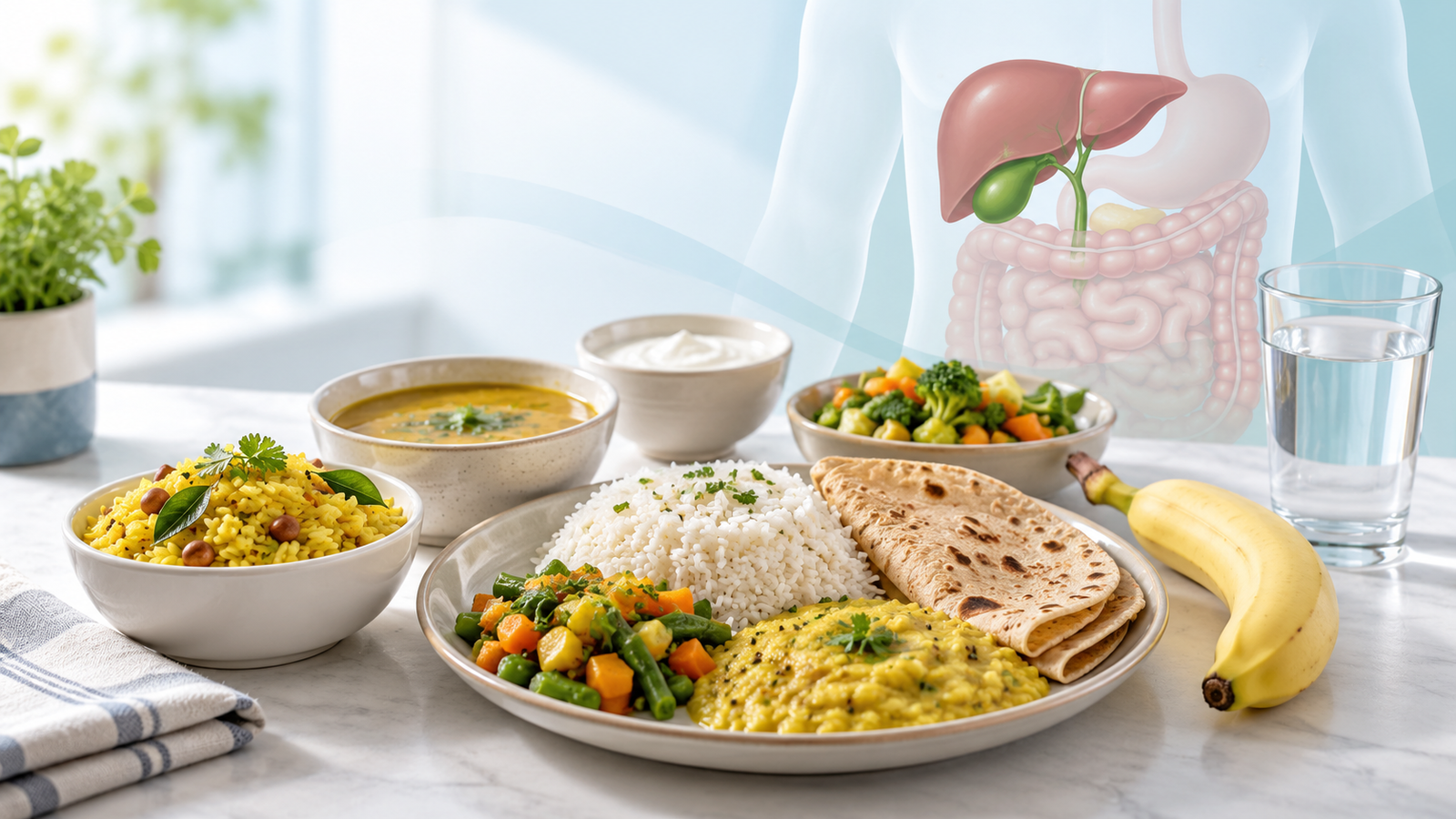
Good Indian options may include:
- Soft khichdi with minimal oil
- Plain rice with thin dal
- Phulka or soft roti without excess ghee
- Idli
- Light poha prepared with little oil
- Daliya
- Oats
- Steamed or lightly cooked vegetables
- Clear vegetable soup
- Banana or other tolerated fruits
- Low-fat curd or dahi if tolerated
- Adequate water and fluids
You do not need to survive only on liquids unless your surgical team specifically recommends it.
Initially, avoid loading your digestive system with samosa, kachori, bhajiya, puri, heavy gravies, or large quantities of butter and ghee.
If one food causes discomfort, stop it temporarily and try it again later rather than assuming you can never eat it again.
What to Eat in Weeks Two to Four?
During weeks two to four, gradually increase the variety of foods while keeping portions moderate. You can start moving toward your usual home-cooked diet if your recovery is progressing normally.
You may gradually introduce regular dal, roti, rice, vegetables, upma, poha, and other home-cooked meals.
Protein is also important during surgical recovery. Depending on your normal diet and tolerance, options may include dal, moong, curd, paneer in moderate quantities, eggs, lean chicken or fish.
Avoid introducing several rich foods on the same day.
For example, eating fried snacks in the afternoon followed by butter-rich paneer and dessert at dinner makes it difficult to identify which food caused bloating or loose motions.
Instead, reintroduce richer foods gradually.
Indian Diet After Gallbladder Removal: Week-by-Week Table
| Recovery period | Eat more freely | Eat in small amounts | Avoid for now |
|---|---|---|---|
| Week 1 | Khichdi, plain rice, thin dal, idli, daliya, oats, light poha, soft vegetables | Low-fat dahi, tea, roti, fruit | Fried farsan, puri, samosa, pakora, heavy gravy, excess ghee |
| Weeks 2–4 | Dal, roti, rice, sabzi, poha, upma, fruit | Paneer, eggs, lean chicken/fish, small amounts of oil | Very oily curries, large fried meals, excess butter/ghee |
| Month 2+ | Regular balanced home food as tolerated | Rich curries, sweets, restaurant food, ghee | Foods that repeatedly trigger symptoms |
| Long term | Balanced normal diet | Fried and high-fat foods in moderation | No universal permanent restriction unless medically advised |
Patients undergoing gallbladder removal surgery in Surat should follow the postoperative diet and recovery instructions provided by their surgical team.
Which Indian Foods Are Safe and Which Can Cause Trouble?
Simple home-cooked Indian foods are generally easier to introduce than large, oily or deep-fried meals. Individual tolerance matters more than labelling every food as permanently “safe” or “unsafe.”
Dal and khichdi
Moong dal and light khichdi are commonly useful during early recovery. As your digestion settles, you can introduce your regular dals gradually.
If rajma, chole, or heavier pulses cause gas or bloating, reduce the portion and try them again later.
Roti and rice
Plain roti, phulka, and rice can form part of your recovery diet. Avoid covering every roti with large quantities of butter or ghee during the initial period.
Poha, idli and upma
These can be practical breakfast options when prepared with limited oil. Cooking method matters: lightly prepared poha differs significantly from heavily oiled poha with fried toppings.
Tea and coffee
You may be able to drink tea after surgery, but start with a small amount. Strong tea, excess milk, sugar or caffeine may trigger digestive symptoms in some people.
Non-vegetarian foods
Lean chicken, fish and eggs can provide protein. Introduce them gradually and prefer boiled, grilled or lightly cooked preparations instead of deep-fried chicken, rich butter gravies or very fatty meat during early recovery.
How Much Oil and Ghee Is Safe?
You usually do not need to eliminate dietary fat permanently after gallbladder removal. During early recovery, however, keeping meals relatively low in fat may improve tolerance.
There is no single amount of oil or ghee that suits every person after cholecystectomy.
Start with small quantities of cooking oil. If you tolerate your regular meals without pain, bloating, or loose stools, you can gradually move toward a normal balanced intake.
Treat ghee similarly.
Rather than adding several spoonfuls immediately after surgery, introduce a small amount and observe how you feel.
Remember that fat can come from several foods in the same meal: cooking oil, ghee, butter, cream, cheese, fried snacks, and rich desserts can add up quickly.
Why Do Some People Get Diarrhoea After Surgery?
Some patients develop temporary loose motions or urgency after gallbladder removal because bile enters the intestine more continuously. High-fat meals can worsen symptoms in some people.
For many patients, bowel habits gradually settle as the digestive system adjusts.
If you experience loose stools, temporarily reduce very oily and fatty foods and eat smaller meals.
Adequate fluids are important, especially if you have repeated loose motions.
Persistent diarrhoea should not automatically be blamed on the operation. Infection, medications and other digestive problems can also cause it.
If diarrhoea becomes frequent, severe or prolonged, speak with your surgeon or physician.
When Can You Eat Normally Again?
Many patients gradually move toward a normal balanced diet over several weeks, but there is no exact date that applies to everyone. Your symptoms and tolerance should guide food reintroduction.
Some people tolerate regular home food relatively quickly. Others need longer before they feel comfortable eating richer meals.
By around four to six weeks, many patients can eat a broader range of foods if their recovery has been uncomplicated.
The long-term goal is usually a balanced diet, not permanent avoidance of all fats.
Even after complete recovery, routinely eating excessive fried food is not necessary for good nutrition with or without a gallbladder.
Foods to Avoid After Gallbladder Removal At Least Initially
The foods to avoid after life after gallbladder removal mainly include foods that are very fatty, oily, or difficult for you to tolerate during early recovery.
For the first few weeks, limit:
- Deep-fried samosa and kachori
- Bhajiya and pakora
- Puri
- Very oily farsan
- Heavy Punjabi gravies
- Excess butter and cream
- Large quantities of ghee
- Very fatty meat
- Deep-fried chicken or fish
- Large restaurant meals
- Rich desserts if they trigger symptoms
These are generally temporary precautions rather than lifelong prohibitions.
Practical Tips for Eating After Cholecystectomy
During recovery, keep meals simple and make changes gradually:
- Eat smaller meals more frequently at first.
- Avoid suddenly eating a large, high-fat meal.
- Introduce one richer food at a time.
- Choose grilled, steamed, boiled, or lightly cooked foods more often.
- Drink enough water.
- Add fibre gradually rather than suddenly.
- Pay attention to foods that repeatedly cause loose motions or bloating.
- Follow your surgeon’s specific postoperative instructions.
A simple food diary can also help if you repeatedly experience digestive symptoms.
When Should You Call Your Surgeon?
Contact your surgical team if symptoms become severe, persist, or appear unusual for routine recovery. Do not assume every abdominal symptom after surgery comes from food. For gallbladder-related surgical evaluation, patients can consult Dr. Hitesh Arora and learn more about gallbladder surgery in Surat at Arora Elite Care.
Seek medical advice for symptoms such as worsening or severe abdominal pain, persistent vomiting, fever, increasing abdominal swelling, inability to eat or drink, jaundice, wound redness or discharge, or persistent severe diarrhoea.
After gallbladder surgery, your surgeon can also guide you if you remain unable to tolerate normal food after the expected recovery period.
For gallbladder-related surgical evaluation in Surat, patients can consult Dr. Hitesh Arora at Arora Elite Care.
Can You Follow a Normal Indian Diet Long Term?
Yes. For most people, life after gallbladder removal does not require a special lifelong diet.
A balanced Indian diet can include roti, rice, dal, vegetables, fruit, curd, appropriate protein sources, and moderate quantities of healthy fats.
The key is to gradually discover your tolerance during recovery rather than creating unnecessary permanent restrictions.
Your surgeon’s advice should take priority if you have diabetes, liver disease, pancreatitis, another digestive disorder, or specific nutritional requirements.
Conclusion
A practical life after gallbladder removal diet should focus on gradual progression rather than strict lifelong restrictions. Start with small, low-fat meals during the early recovery period. Khichdi, dal-rice, idli, poha, daliya, roti, and lightly cooked vegetables can be useful Indian options.
Over the next few weeks, gradually introduce regular home-cooked foods, protein sources, and modest amounts of oil or ghee according to your tolerance. Fried snacks, rich gravies and very fatty meals are best limited initially, but gallbladder removal does not automatically mean giving them up forever. If digestive symptoms persist after surgery or you are unsure whether your recovery is progressing normally, book a surgical consultation in Surat with Dr. Hitesh Arora for individual guidance.
FAQs
Can you live normally without a gallbladder?
Yes. Most people can live a normal life without a gallbladder because the liver continues producing bile for digestion. You may need to keep meals smaller and lower in fat during early recovery, but many patients gradually return to a normal balanced diet as their digestive system adjusts.
Why do I get loose motions after gallbladder surgery?
After gallbladder removal, bile flows more continuously into the intestine. This can contribute to loose stools or urgency in some patients, particularly after fatty meals. Symptoms often improve with time. If diarrhoea remains frequent, severe, or prolonged, contact your doctor to check for other possible causes.
Can I eat ghee after gallbladder removal?
Yes, you may be able to eat ghee again, but introduce it gradually. During early recovery, large amounts of dietary fat may trigger bloating or loose stools in some people. Start with a small quantity and increase according to tolerance rather than returning immediately to high-fat meals.
Is curd or dahi safe after surgery?
Dahi can be included after gallbladder surgery if you tolerate dairy products. Low-fat curd may be easier during early recovery. Start with a small portion and observe your symptoms. If dairy causes bloating, cramps, or loose stools, reduce it temporarily and discuss persistent intolerance with your doctor.
How long should I avoid fried food?
There is no universal deadline. It is sensible to avoid or significantly limit deep-fried foods during the first few weeks and reintroduce them gradually once you tolerate normal meals. Even after recovery, frequent high-fat fried meals may cause digestive symptoms and are best consumed in moderation.
Will I put on weight after gallbladder removal?
Gallbladder removal itself does not mean that you will automatically gain weight. Body weight depends on overall calorie intake, food choices, physical activity, and other factors. Once you recover, maintaining a balanced diet and returning to regular activity according to your surgeon’s advice can support healthy weight management.