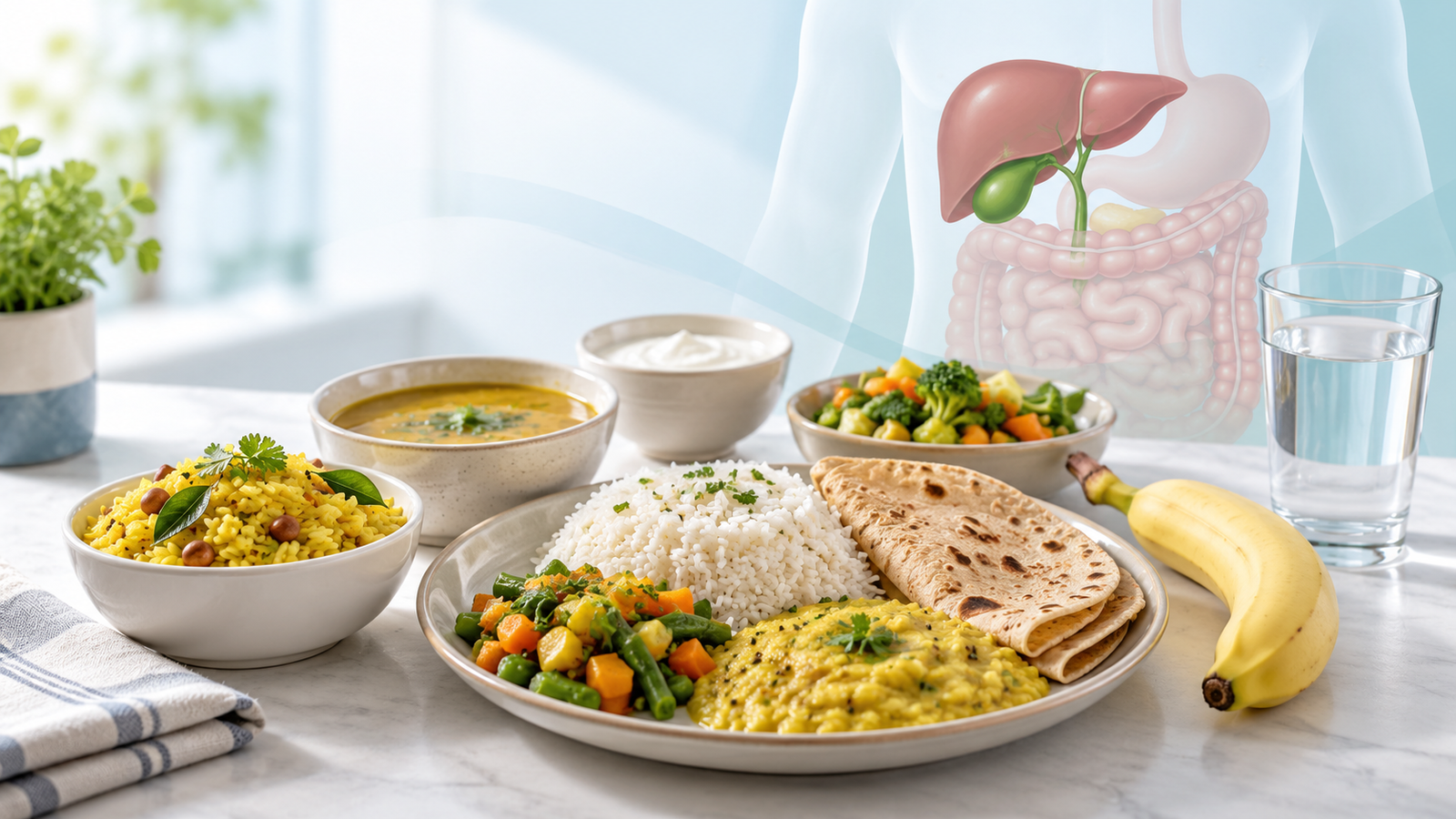
The best diet after gallbladder removal usually starts with small, relatively low-fat meals and gradually returns to normal home-cooked food. During early recovery, patients can often eat khichdi, dal-rice, soft roti, idli, poha, cooked vegetables, and low-fat curd. Avoid large, oily meals initially, and reintroduce foods according to your digestive tolerance and surgeon’s advice.
Gallbladder removal, medically called cholecystectomy, is a common operation for symptomatic gallstones and other gallbladder conditions.
After surgery, many Indian patients have practical questions: Can I eat roti? Is curd safe? When can I add ghee? Will spicy food cause problems? Can I eat normally again?
The good news is that most people do not need a strict, lifelong fat-free diet after gallbladder removal.
This guide explains what to eat during recovery, which Indian foods to limit, how to manage loose motions and bloating, and when to contact your surgeon.
What Can You Eat After Gallbladder Removal?
After gallbladder surgery, start with small portions of easily tolerated foods and gradually increase variety as your appetite and digestion improve.
Suitable Indian food options often include:
- Soft moong dal khichdi
- Plain rice and thin dal
- Phulka or soft roti without excess ghee
- Idli
- Light poha
- Daliya and oats
- Cooked vegetables
- Vegetable soup
- Banana and other tolerated fruits
- Low-fat curd or dahi
- Adequate water and fluids
You do not necessarily need to follow a liquid-only diet after surgery.
Many patients can begin eating regular food relatively soon after an uncomplicated laparoscopic procedure, depending on nausea, appetite, and their surgeon’s instructions.
However, large meals containing substantial amounts of oil, butter, cream, or ghee may cause discomfort during early recovery.
Week-by-Week Indian Diet Plan After Gallbladder Removal
There is no fixed diet schedule that applies to every patient. The following table provides a practical guide for gradually returning to normal meals after uncomplicated gallbladder surgery.
| Recovery Period | Recommended Indian Foods | Foods to Limit |
|---|---|---|
| First 1–3 days | Small portions of khichdi, dal-rice, toast, idli, soup and soft vegetables as tolerated | Large meals, deep-fried foods and rich gravies |
| Days 4–7 | Roti, rice, dal, light sabzi, poha, daliya and low-fat curd | Excess ghee, butter, cream and oily snacks |
| Week 2 | Regular home-cooked meals, fruits, vegetables and suitable protein sources | Very large or high-fat meals |
| Weeks 3–4 | Gradually expand food variety and portions | Foods that repeatedly cause diarrhoea or bloating |
| After 4 weeks | Balanced normal diet according to tolerance | Excessive dietary fat if it triggers symptoms |
Important: This table is not a compulsory timetable. Some patients tolerate normal meals earlier, while others need more time. Follow the instructions provided by your surgical team.
Patients preparing for or recovering from gallbladder removal surgery in Surat should follow their surgeon’s individual recommendations.
Why Does Digestion Change After Gallbladder Removal?
Your liver continues to produce bile even after your gallbladder is removed.
Before surgery, the gallbladder stores and concentrates bile, releasing it into the small intestine when needed for digestion.
After surgery, bile flows more continuously from the liver into the intestine.
Your body can still digest fats, but some people experience temporary digestive changes.
These may include:
- Loose motions
- Bloating
- Increased gas
- Abdominal discomfort
- Urgency after meals
- Reduced tolerance for large fatty meals
Many of these symptoms improve as digestion adjusts.
However, persistent or worsening symptoms need medical evaluation rather than repeated dietary restrictions alone.
Which Indian Foods Are Best After Gallbladder Surgery?
1. Khichdi and Dal
Moong dal khichdi is a practical early recovery meal because patients can prepare it with minimal oil.
Thin dal and plain rice may also be comfortable options.
As digestion improves, gradually introduce regular dals.
Rajma, chole, and other heavier pulses may cause gas in some people. Start with smaller portions if you experience bloating.
2. Roti and Rice
Yes, you can generally eat roti after gallbladder surgery once you tolerate solid food.
Plain phulka, soft roti, and rice are not inherently high-fat foods.
The preparation matters more than the food itself.
For example, a plain roti may be easier to tolerate than a paratha cooked with generous amounts of oil or ghee.
3. Curd or Dahi
Low-fat curd is generally suitable after gallbladder removal if you tolerate dairy products.
Start with a small serving.
If curd causes bloating, cramps, or loose stools, reduce the portion or avoid it temporarily.
Choose plain curd rather than rich, cream-heavy preparations during early recovery.
4. Idli, Poha and Upma
Idli, lightly prepared poha and upma can make convenient breakfast choices.
Avoid adding excessive oil, butter or fried toppings.
5. Vegetables and Fruits
Cooked vegetables can provide fibre, vitamins and minerals during recovery.
Introduce raw salads and larger quantities of high-fibre foods gradually if they cause gas.
Fruits such as banana, papaya and apple may be included according to individual tolerance.
6. Protein-Rich Foods
Protein supports tissue repair during recovery.
Suitable choices may include:
- Dal
- Low-fat curd
- Moderate portions of paneer
- Eggs
- Lean chicken
- Fish
Prefer boiled, steamed, grilled, or lightly cooked preparations.
Avoid heavily fried or cream-based versions during early recovery.
Sample One-Day Indian Diet After Gallbladder Removal
This example is suitable for someone who has resumed solid foods and tolerates the ingredients.
| Meal | Suggested Food |
|---|---|
| Breakfast | Idli or light poha |
| Mid-morning | Banana or another tolerated fruit |
| Lunch | Two small phulkas, moong dal, and lightly cooked sabzi |
| Afternoon | Low-fat curd, if tolerated |
| Evening | Vegetable soup or a light snack |
| Dinner | Soft khichdi with cooked vegetables |
| Fluids | Water throughout the day, according to medical advice |
Adjust portions to appetite, nutritional needs, and digestive comfort.
Patients with diabetes, kidney disease, pancreatitis, or other medical conditions may need an individual diet plan.
Which Foods Should You Avoid After Gallbladder Removal?
During early recovery, limit foods that contain large amounts of fat, particularly if they trigger bloating, abdominal discomfort, or loose stools.
Examples include:
- Samosa and kachori
- Bhajiya and pakora
- Puri
- Oily farsan
- Heavy Punjabi gravies
- Excess butter and cream
- Large amounts of ghee
- Deep-fried chicken or fish
- Very fatty meat
- Large restaurant meals
- Rich desserts
These restrictions are generally temporary.
You do not need to assume that every fried or spicy food will remain permanently off-limits.
Is Spicy Food Allowed?
Spices themselves are not universally prohibited after gallbladder surgery.
However, very spicy meals may aggravate digestive discomfort in some patients.
Start with mildly seasoned food and increase spice levels gradually according to tolerance.
Can You Eat Ghee or Oil After Gallbladder Removal?
Yes. Most patients can eventually include moderate amounts of dietary fat after gallbladder removal.
You do not need to eliminate all fat permanently.
However, eating a large amount of ghee, butter, or oil in one meal may cause symptoms during early recovery.
Begin with small quantities and increase gradually.
Remember that fat from several ingredients adds up.
For example, a meal containing oily sabzi, buttered roti, creamy paneer and fried sweets may contain substantially more fat than any one dish alone.
The long-term goal is a balanced diet rather than a completely fat-free diet.
Why Do Loose Motions Happen After Gallbladder Surgery?
Loose motions after gallbladder removal can occur because bile enters the intestine more continuously instead of being stored and released by the gallbladder.
In some patients, bile acids reaching the colon contribute to diarrhoea or urgency.
Fatty meals may worsen these symptoms.
How Can You Manage Loose Motions?
Try these steps:
- Eat smaller meals rather than large portions.
- Temporarily reduce deep-fried and high-fat foods.
- Drink adequate fluids to replace losses.
- Introduce soluble-fibre foods gradually.
- Note which foods repeatedly trigger symptoms.
- Contact your doctor if diarrhoea persists.
Some patients develop bile acid diarrhoea that requires medical treatment.
A doctor may consider specific medicines when clinically appropriate.
Do not assume that every episode of diarrhoea comes from gallbladder removal. Infections, medicines and other digestive conditions can also cause loose stools.
How Can You Reduce Bloating After Gallbladder Removal?
Bloating may occur during recovery, particularly after large meals or foods that produce gas.
You can try:
- Eating smaller portions
- Chewing food slowly
- Avoiding very oily meals
- Reducing carbonated drinks if they trigger symptoms
- Introducing beans and heavier pulses gradually
- Walking gently as your surgeon permits
- Keeping a food diary
Do not remove entire food groups unnecessarily.
If bloating becomes severe, persistent, or associated with worsening pain, seek medical advice.
Can You Eat Normally After Gallbladder Removal?
Yes. Most people can eventually return to a normal, balanced diet after gallbladder removal.
The liver continues to make bile, allowing the digestive system to process food without a gallbladder.
Some patients resume their usual home-cooked meals relatively quickly.
Others require several weeks before they comfortably tolerate richer foods.
Many patients can eat a wider variety of foods within four to six weeks after uncomplicated surgery, although individual recovery varies.
You can gradually return to foods such as:
- Roti and rice
- Dal and sabzi
- Fruits
- Curd
- Eggs
- Lean meat or fish
- Moderate amounts of healthy fats
A healthy diet remains important even after recovery.
Frequent large, high-fat meals may cause symptoms in some people, regardless of how long ago they had surgery.
When Should You Contact Your Surgeon?
Mild digestive changes can occur during recovery, but some symptoms require prompt medical attention.
Contact your surgical team if you experience:
- Persistent or worsening abdominal pain
- Repeated vomiting
- Fever
- Increasing abdominal swelling
- Yellowing of the eyes or skin
- Wound redness or discharge
- Difficulty eating or drinking
- Frequent or prolonged diarrhoea
Seek urgent care for severe pain, significant dehydration, or rapidly worsening symptoms.
Do not assume that every abdominal symptom after surgery results from eating the wrong food.
Diet and Recovery Guidance at Arora Elite Care, Surat
Patients recovering from gallbladder surgery can consult Dr. Hitesh Arora, an Advanced Laparoscopic and General Surgeon at Arora Elite Care, Surat.
During a postoperative consultation, the surgeon can review:
- Recovery progress
- Food tolerance
- Abdominal discomfort
- Loose motions or bloating
- Wound healing
- Return to normal activities
Read more about gallbladder surgery in Surat and diet before and after surgery.
Clinic: Arora Elite Care
Address: Solaris Kode 202–203, VIP Road, Surat, Gujarat 395007
Book a Surgery Consultation for individual postoperative guidance.
Conclusion
A healthy diet after gallbladder removal does not require permanent restrictions on every oily or spicy food.
Start with smaller, relatively low-fat meals and choose simple Indian foods such as khichdi, dal, roti, rice, idli, poha and cooked vegetables.
Gradually introduce curd, protein-rich foods, and moderate amounts of oil or ghee according to your tolerance.
Most patients eventually return to a normal balanced diet. However, persistent diarrhoea, bloating, or abdominal pain should prompt medical evaluation.
If you have concerns about your recovery, consult your surgeon for advice tailored to your health and treatment.
Frequently Asked Questions
1. Can I Eat Curd After Gallbladder Removal?
Yes. You can generally eat curd after gallbladder removal if you tolerate dairy. Low-fat curd may be easier during early recovery. Start with a small serving and reduce it temporarily if it causes bloating or loose motions.
2. Can I Eat Roti After Gallbladder Surgery?
Yes. Plain roti or phulka can be part of your recovery diet once you tolerate solid food. Avoid adding excessive butter or ghee initially. Choose soft roti and moderate portions according to your appetite.
3. Can I Eat Rice After Gallbladder Removal?
Yes. Plain rice is generally suitable after gallbladder surgery. You can combine it with thin dal or lightly cooked vegetables. Avoid very oily rice preparations during early recovery if they trigger digestive discomfort.
4. Can You Eat Normally After Gallbladder Removal?
Yes. Most people return to a normal balanced diet after recovery. Some tolerate regular food quickly, while others need several weeks to adjust. Gradually reintroduce foods and follow your surgeon’s advice.
5. How Long Should I Avoid Oily Food After Gallbladder Surgery?
There is no fixed deadline for everyone. Many patients benefit from limiting large, oily meals during early recovery and gradually reintroducing dietary fat over the following weeks. Individual tolerance should guide progression.
6. Why Do I Have Loose Motions After Gallbladder Removal?
After surgery, bile flows more continuously into the intestine. In some patients, bile acids contribute to loose motions or urgency, especially after fatty meals. Persistent or severe diarrhoea requires medical assessment.