
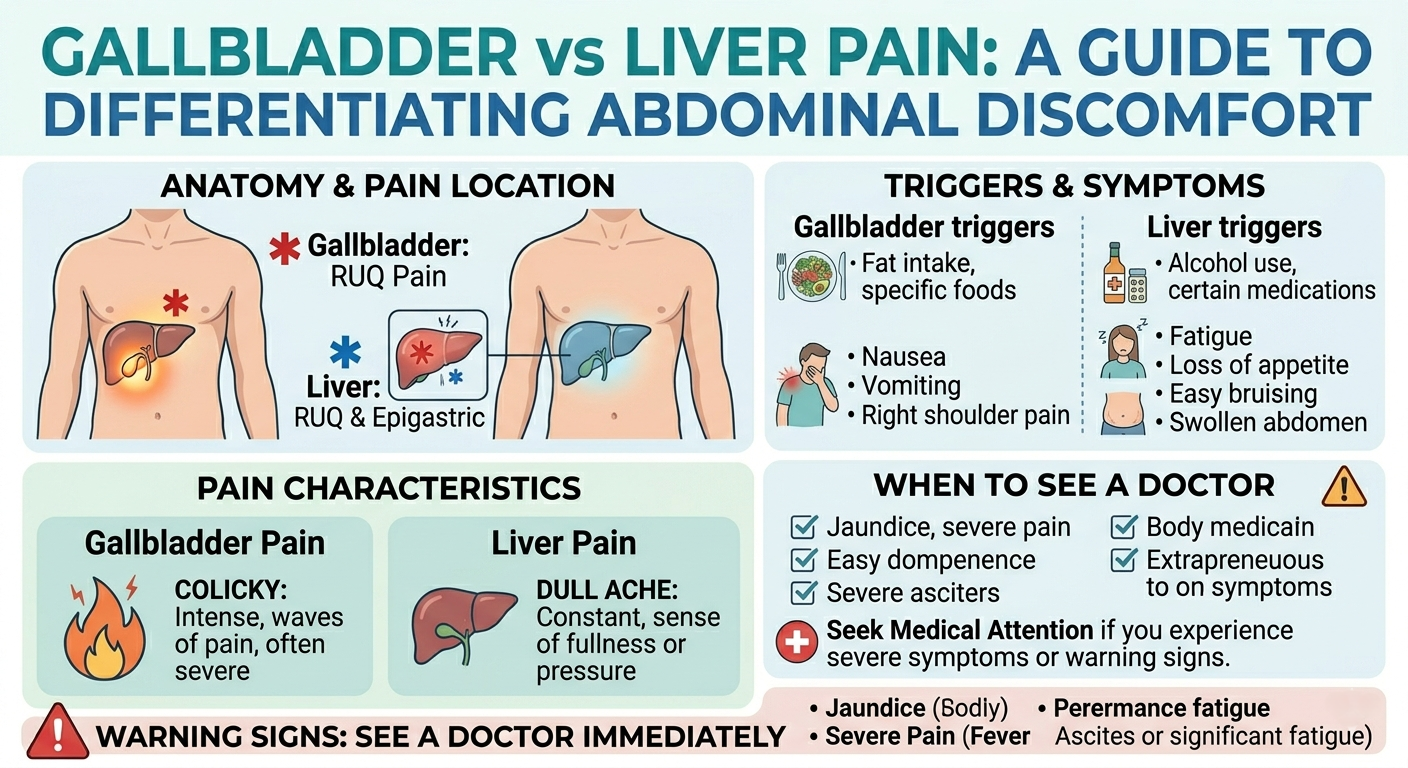
Gallbladder pain and liver-related pain can both occur in the upper-right abdomen, but their patterns may differ. Gallbladder pain often starts suddenly, sometimes after eating, and may spread to the right shoulder or back. Liver-related discomfort varies depending on the condition and may occur alongside fatigue, jaundice, or abdominal swelling. This guide explains the gallbladder vs liver pain differences, possible causes, diagnostic tests, and warning signs that require medical attention.
However, symptoms alone cannot reliably confirm whether pain comes from the liver or gallbladder.
Both organs are located close together, and several other conditions can also cause upper abdominal pain.
At Arora Elite Care, Dr. Hitesh Arora, an Advanced Laparoscopic and General Surgeon in Surat, evaluates patients with gallbladder disease and other abdominal surgical conditions.
Gallbladder Pain vs Liver Pain: Key Differences
The following comparison explains common symptom patterns.
| Feature | Gallbladder Pain | Liver-Related Pain |
|---|---|---|
| Pain location | Upper-right or upper-middle abdomen | Usually upper-right abdomen |
| Pain type | Often steady, sometimes severe | Variable; may feel dull or like pressure |
| Onset | May begin suddenly | May develop gradually or suddenly |
| Timing | Sometimes follows meals | Usually no consistent relationship with meals |
| Duration | Often lasts 30 minutes to several hours | Depends on the underlying condition |
| Pain spreading | May spread to the right shoulder or back | Less characteristic |
| Associated symptoms | Nausea, vomiting; sometimes fever | Fatigue, nausea, jaundice, or swelling in some conditions |
| Common causes | Gallstones, cholecystitis, bile duct problems | Hepatitis, inflammation, enlargement or other liver disorders |
| Diagnostic tests | Ultrasound, blood tests, sometimes HIDA scan | Liver blood tests, ultrasound and other investigations |
| Treatment | Depends on the cause; sometimes surgery | Depends on the specific liver condition |
Important: These differences are general patterns, not diagnostic rules. Gallbladder disease can cause jaundice, and many liver diseases cause no pain at all.
Where Is Gallbladder Pain Usually Felt?
Gallbladder pain commonly occurs beneath the right ribs or in the upper-middle abdomen.
It may spread towards the right shoulder blade or back.
A typical gallstone-related pain episode, often called biliary colic, may:
- Begin relatively suddenly.
- Feel steady and intense rather than coming in brief spasms.
- Last approximately 30 minutes to several hours.
- Occur after eating, although not always.
- Cause nausea or vomiting.
- Return in separate episodes.
Despite the term biliary colic, the pain is often steady rather than cramping.
Does Gallbladder Pain Always Occur After Fatty Food?
No.
Fatty meals may trigger symptoms because eating stimulates gallbladder contraction, but attacks can also happen after other meals or during the night.
Pain after eating does not automatically confirm gallstones.
Read more about gallbladder stone symptoms.
Where Is Liver Pain Usually Felt?
Liver-related discomfort may occur in the upper-right abdomen beneath the ribs, but many liver conditions produce no pain.
The liver tissue itself has limited pain sensitivity. Discomfort may occur when inflammation, swelling, or enlargement stretches its surrounding capsule.
Depending on the underlying condition, patients may experience:
- Dull upper-right abdominal discomfort
- A feeling of pressure or fullness
- Fatigue
- Reduced appetite
- Nausea
- Jaundice
- Abdominal swelling in some advanced conditions
However, these symptoms are not specific to liver disease.
For example, fatigue and nausea can result from many unrelated conditions.
Does Fatty Liver Cause Right-Side Abdominal Pain?
Fatty liver disease often causes no noticeable symptoms.
Some patients report vague upper-right abdominal discomfort, but this symptom alone cannot establish a diagnosis.
Doctors may identify fatty liver during ultrasound imaging or investigations performed for another reason.
What Causes Gallbladder Pain?
Several gallbladder and biliary conditions can cause upper abdominal pain.
1. Gallstones
Gallstones are hardened deposits that form inside the gallbladder.
When a stone temporarily blocks the gallbladder outlet, it can cause biliary pain.
Some people have gallstones without symptoms and never require treatment.
2. Acute Cholecystitis
Acute cholecystitis is inflammation of the gallbladder, commonly associated with obstruction by a gallstone.
It may cause:
- Persistent upper-right abdominal pain
- Fever
- Nausea
- Vomiting
- Abdominal tenderness
This condition requires prompt medical assessment.
3. Common Bile Duct Stones
A gallstone can move into the common bile duct and obstruct bile flow.
Possible symptoms include abdominal pain, jaundice, dark urine, and pale stools.
If obstruction is accompanied by infection, the condition can become a medical emergency.
4. Other Gallbladder Disorders
Less common causes include gallbladder inflammation without stones and certain functional gallbladder disorders.
These conditions require careful evaluation rather than diagnosis from symptoms alone.
What Causes Liver-Related Pain?
Liver-related discomfort may result from several conditions.
1. Hepatitis
Hepatitis means inflammation of the liver.
It may result from viral infections, medicines, alcohol, or other causes.
Some patients develop fatigue, nausea, jaundice, or abdominal discomfort.
2. Fatty Liver Disease
Fat accumulation in the liver is common and often causes no symptoms.
Some people experience vague discomfort, but diagnosis generally depends on clinical assessment and investigations.
3. Alcohol-Related Liver Disease
Excessive alcohol consumption can contribute to liver inflammation and long-term damage.
Symptoms depend on the severity and stage of the disease.
4. Liver Enlargement or Inflammation
Certain conditions can enlarge or inflame the liver, potentially causing discomfort beneath the right ribs.
5. Liver Infection or Other Conditions
Liver abscesses and other less common disorders may cause pain, sometimes accompanied by fever or systemic illness.
These conditions require medical evaluation.
Can Gallbladder Pain Feel Like Liver Pain?
Yes.
Because the gallbladder lies beneath the liver, discomfort from either organ can occur in a similar area.
Patients may find it difficult to identify the source based only on location.
Other possible causes of upper-right abdominal pain include:
- Stomach or duodenal problems
- Pancreatic conditions
- Muscle or rib-related pain
- Kidney disorders
- Certain lung conditions
A medical examination helps determine which investigations are appropriate.
Does Pain After Eating Indicate a Gallbladder Problem?
Pain after eating can suggest gallbladder disease, particularly when it is located in the upper-right abdomen and follows a recurring pattern.
However, other digestive conditions can also cause meal-related discomfort.
Doctors consider:
- Exact pain location
- Duration of each episode
- Relationship to meals
- Nausea or vomiting
- Fever or jaundice
- Previous medical history
- Examination findings
A history of pain after fatty food is useful, but it is not enough to confirm gallstones.
Which Tests Diagnose Gallbladder vs Liver Pain?
Doctors commonly use abdominal ultrasound and blood tests to investigate upper-right abdominal pain. Additional tests depend on the suspected condition.
Abdominal Ultrasound
Ultrasound is often the first imaging test for suspected gallstones or gallbladder inflammation.
It can help assess:
- Gallstones
- Gallbladder wall changes
- Bile duct enlargement
- Liver size and appearance
- Certain liver abnormalities
However, ultrasound does not detect every possible condition.
Liver Blood Tests
Blood tests can measure substances such as:
- Bilirubin
- ALT
- AST
- ALP
- Albumin
Doctors may also assess other markers according to the clinical situation.
Abnormal results can suggest liver injury or bile duct problems, but they do not always identify the exact cause.
Learn more about liver function tests from Mayo Clinic.
Complete Blood Count
A complete blood count may help identify signs of infection or inflammation.
HIDA Scan
A hepatobiliary scan, commonly called a HIDA scan, may be useful in selected patients when gallbladder function or acute cholecystitis remains uncertain after initial evaluation.
MRCP
Magnetic resonance cholangiopancreatography may help doctors examine the bile ducts when obstruction or bile duct stones are suspected.
CT Scan or Other Investigations
CT imaging and additional tests may be recommended when doctors suspect complications or another abdominal condition.
No single test is appropriate for every patient. The choice depends on symptoms, examination findings, and initial results.
When Is Right-Side Abdominal Pain an Emergency?
Seek urgent medical attention if you experience:
- Severe or persistent upper abdominal pain
- Fever or chills with abdominal pain
- Yellowing of the eyes or skin
- Repeated vomiting
- Fainting or significant weakness
- Confusion or severe illness
Pain accompanied by fever and jaundice may indicate a serious bile duct infection requiring urgent treatment.
Do not delay assessment while trying to determine whether the pain is from the liver or gallbladder.
How Are Gallbladder and Liver Conditions Treated?
Treatment depends on the confirmed diagnosis.
Treatment for Gallbladder Conditions
Possible approaches include:
- Monitoring when gallstones cause no symptoms
- Medicines for symptom relief in selected situations
- Treatment of infection or inflammation
- Laparoscopic gallbladder removal for appropriate patients
- Bile duct procedures when stones obstruct the common bile duct
Laparoscopic cholecystectomy is a commonly used treatment for symptomatic gallstones.
However, not every patient with gallstones needs surgery.
Learn more about gallbladder removal surgery in Surat.
Treatment for Liver Conditions
Management may include:
- Treatment of viral hepatitis or other infections
- Addressing alcohol-related liver injury
- Managing metabolic risk factors
- Reviewing medicines that may affect the liver
- Monitoring liver blood tests
- Specialist treatment for advanced liver disease
Most liver conditions are not treated by gallbladder surgery.
Patients with suspected liver disease may need evaluation by a physician, gastroenterologist, or hepatologist.
Gallbladder Pain Evaluation at Arora Elite Care, Surat
Patients experiencing recurrent upper-right abdominal pain can consult Dr. Hitesh Arora, an Advanced Laparoscopic and General Surgeon at Arora Elite Care.
During a consultation, the doctor may:
- Review the location and pattern of pain.
- Ask about food-related symptoms.
- Examine the abdomen.
- Review previous ultrasound or blood test reports.
- Recommend further investigations when necessary.
- Discuss surgical treatment if gallbladder disease is confirmed.
- Recommend referral when a liver condition requires specialist medical care.
The goal is to identify the cause of symptoms before selecting treatment.
Clinic: Arora Elite Care
Address: Solaris Kode 202–203, VIP Road, Surat, Gujarat 395007
Book a Surgery Consultation in Surat
Conclusion
Understanding gallbladder vs liver pain can help patients recognise symptom patterns, but it cannot replace medical diagnosis.
Gallbladder pain often occurs suddenly in the upper-right abdomen and may spread towards the shoulder or back. Liver-related discomfort is more variable, and many liver conditions cause no pain.
Ultrasound, blood tests, and other investigations help doctors identify the underlying cause.
If you experience recurring abdominal pain, consult a qualified healthcare professional. Seek urgent care for severe persistent pain, fever, jaundice, or repeated vomiting.
Frequently Asked Questions
1. How Can I Tell if My Pain Is From My Liver or Gallbladder?
Gallbladder pain often occurs in episodes and may spread to the right shoulder or back. Liver-related discomfort can be more variable. However, symptoms overlap, so doctors may need ultrasound and blood tests to determine the cause.
2. Can Gallbladder Pain Feel Like Liver Pain?
Yes. Both organs are located in the upper-right abdomen, so their symptoms may feel similar. Pain location alone cannot reliably identify the affected organ.
3. Does Fatty Liver Cause Right-Side Abdominal Pain?
Fatty liver often causes no symptoms. Some patients experience vague upper-right abdominal discomfort, but this does not confirm fatty liver. Diagnosis requires appropriate clinical evaluation and investigations.
4. Is Pain After Eating Always Caused by Gallstones?
No. Gallstones can cause pain after meals, but stomach, intestinal, and other digestive conditions may produce similar symptoms. A doctor may recommend an ultrasound and other tests when gallbladder disease is suspected.
5. Can Gallbladder Problems Affect Liver Blood Tests?
Yes. Gallstones obstructing the common bile duct can cause abnormal bilirubin and liver enzyme levels. However, abnormal liver blood tests have many possible causes and require medical interpretation.
6. Which Test Is Best for Gallbladder vs Liver Pain?
Abdominal ultrasound is often the first imaging test for suspected gallbladder disease. Liver blood tests can help assess liver injury or bile duct obstruction. Additional tests depend on symptoms and initial findings.