
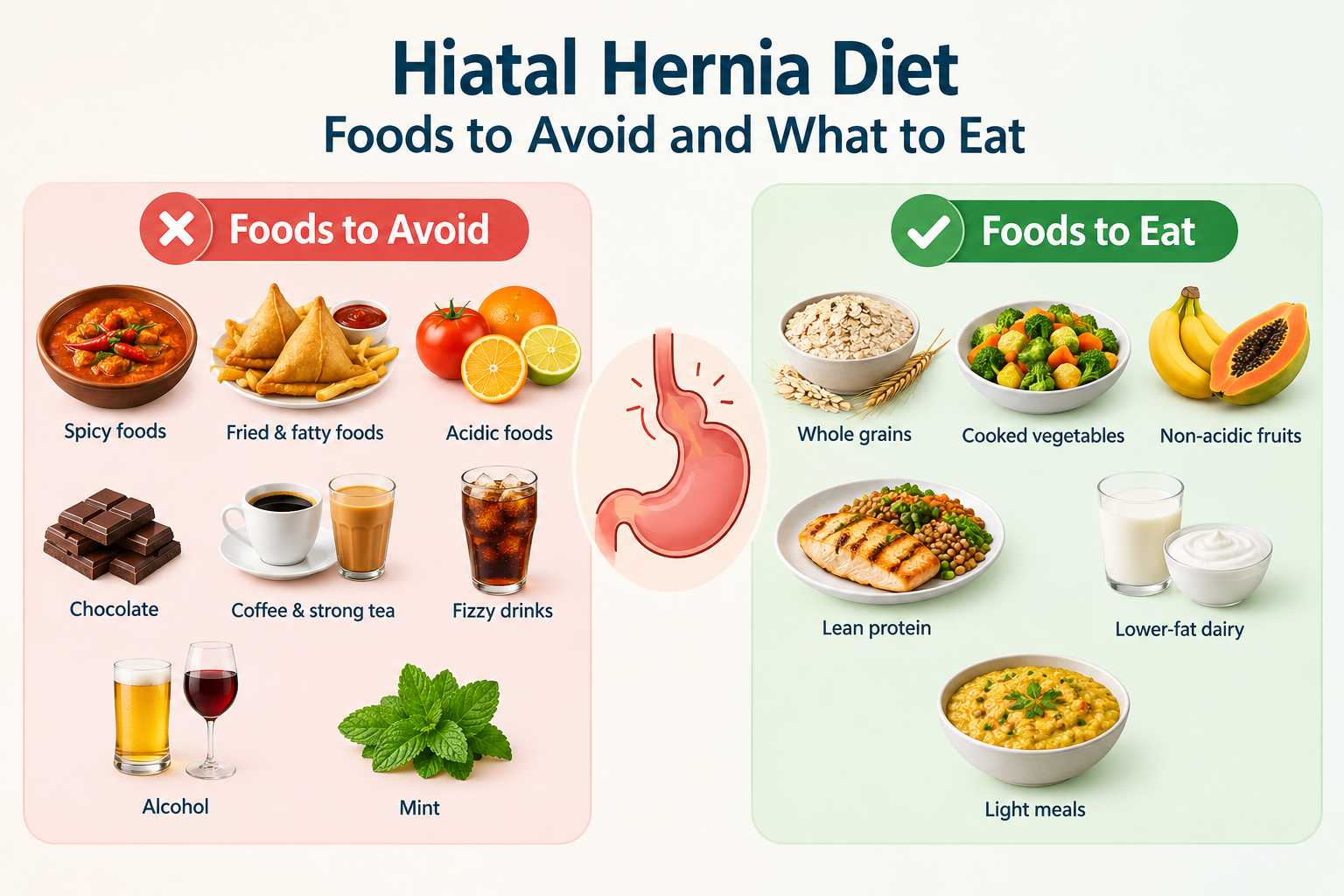
Knowing which hiatal hernia diet foods to avoid can help you manage heartburn, acid reflux, and discomfort after meals. Certain foods may trigger symptoms, while smaller meals and balanced food choices may provide relief. However, triggers vary between individuals, and diet changes do not repair the hernia itself. A suitable diet, healthy eating habits, and medical advice can help you manage symptoms more effectively.
Hiatal Hernia Diet Foods to Avoid
A hiatal hernia occurs when part of the stomach moves upward through an opening in the diaphragm. It can be associated with gastroesophageal reflux, which occurs when stomach contents flow back into the oesophagus.
Some foods and drinks may worsen reflux symptoms. Consider limiting the following if they trigger your discomfort.
1. Spicy Foods
Chilli-heavy curries, spicy pickles, and hot sauces may aggravate heartburn in some people. Try milder seasonings and reduce chilli if you notice symptoms after spicy meals.
2. Fried and Fatty Foods
Puris, pakoras, samosas, chips, and rich gravies may worsen reflux for some people. High-fat meals can delay stomach emptying and may increase discomfort. Choose grilled, steamed, boiled, or lightly cooked alternatives.
3. Acidic Foods
Tomatoes, citrus fruits, lemons, oranges, and their juices can trigger heartburn in some individuals. You do not need to eliminate these foods unless they consistently cause symptoms.
4. Chocolate
Chocolate may aggravate reflux in some people. If you notice heartburn after eating chocolate, reduce your portion or avoid it.
5. Coffee and Strong Tea
Caffeine-containing drinks may trigger symptoms in certain individuals. Try smaller servings or caffeine-free alternatives if coffee or strong tea makes your reflux worse.
6. Carbonated Drinks
Soda and fizzy beverages can increase belching and bloating, potentially making symptoms more uncomfortable. Water is a practical alternative.
7. Alcohol and Mint
Alcohol and peppermint may worsen reflux in some people. Consider limiting them if you notice a clear relationship with your symptoms.
Remember that these are possible triggers, not foods that every person with a hiatal hernia must avoid. A food diary can help you identify your individual triggers.
Best Foods to Eat With a Hiatal Hernia
Along with knowing the hiatal hernia diet foods to avoid, choosing foods that suit your digestive system is important. Aim for a balanced diet that includes protein, fibre, vitamins, and minerals.
Whole Grains
Oats, dalia, whole-wheat roti, and other whole grains provide fibre and can form part of a balanced diet. Adjust portions if particular foods cause bloating.
Cooked Vegetables
Carrots, bottle gourd, pumpkin, spinach, and green beans may be suitable options. Lightly cooked vegetables with less oil and chilli can be easier to tolerate than heavily spiced dishes.
Non-Acidic Fruits
Bananas, papaya, melons, and pears may suit some people with reflux. Choose fruits according to your personal tolerance.
Lean Protein
Moong dal, other lentils, tofu, eggs, fish, and skinless chicken provide protein. Prefer boiled, grilled, steamed, or lightly cooked preparations.
Lower-Fat Dairy Products
Low-fat milk or plain yoghurt may be suitable if you tolerate dairy. Reduce or avoid dairy products that consistently cause discomfort.
Hiatal Hernia Diet Tips to Reduce Acid Reflux
Food selection is only one part of symptom management. Your eating habits and meal timing may also affect reflux.
- Eat smaller meals: Large meals can increase stomach pressure and worsen reflux.
- Eat slowly: Chew food thoroughly and avoid eating too quickly.
- Stay upright after meals: Avoid lying down for at least three hours after eating.
- Eat dinner earlier: Leave sufficient time between your evening meal and bedtime.
- Track your symptoms: Record what you eat and when heartburn occurs to identify patterns.
- Maintain a healthy weight: If you are overweight, gradual weight loss may help reduce reflux symptoms.
- Manage nighttime reflux: Raising the head of your bed may help if symptoms occur while sleeping.
These steps can help some people manage symptoms, but persistent reflux may require medical assessment and treatment.
Sample Indian Diet Plan for a Hiatal Hernia
The following meal plan is a general example. Adjust portions and ingredients according to your nutritional needs and food tolerance.
Breakfast: Oatmeal or vegetable dalia, with a banana if tolerated.
Mid-morning snack: Papaya or another non-acidic fruit.
Lunch: Roti, moong dal, lightly cooked vegetables, and a moderate serving of rice if desired.
Evening snack: A small serving of roasted makhana or another low-fat snack.
Dinner: Vegetable khichdi or roti with dal and cooked vegetables.
Choose moderate portions and limit excess oil, chilli, and heavy gravies if they trigger your symptoms. Drink enough water throughout the day and avoid skipping meals only to eat a large dinner later.
Can Diet Cure a Hiatal Hernia?
Diet changes can help reduce heartburn and acid reflux, but they generally do not correct the anatomical hernia. Treatment depends on the type of hernia, symptom severity, and whether complications are present.
Some people manage their symptoms with lifestyle changes and medication prescribed by a doctor. Others may need further investigations or surgical evaluation, especially when symptoms are severe or persistent.
If dietary changes do not help, consult a qualified medical professional. Seek urgent medical attention for severe chest or upper abdominal pain, difficulty swallowing, vomiting blood, black stools, or persistent vomiting.
When Should You Consult a Hernia Specialist?
Consult a doctor if you frequently experience heartburn, regurgitation, difficulty swallowing, unexplained eating difficulties, or symptoms that disturb your sleep.
A medical evaluation can help determine whether a hiatal hernia, acid reflux, or another condition is causing your symptoms. Your doctor may recommend further investigations before discussing treatment options.
At Arora Elite Care in Surat, Dr. Hitesh Arora provides surgical consultations for hernia-related concerns. With more than 15 years of experience and qualifications including M.S. and FMAS, he can assess your condition and explain suitable treatment options.
For additional information, read about acid reflux symptoms and exercise with a hernia.
Frequently Asked Questions
1. What are the main hiatal hernia diet foods to avoid?
Foods that may trigger symptoms include spicy dishes, fried and fatty meals, chocolate, coffee, alcohol, carbonated drinks, and acidic foods. Avoid or limit the items that consistently worsen your symptoms.
2. Can I eat rice if I have a hiatal hernia?
Yes, rice is tolerated by many people. Eat moderate portions and pair it with lean protein and cooked vegetables. Limit oily or spicy preparations if they trigger reflux.
3. Is milk safe for people with a hiatal hernia?
Low-fat milk may suit some people, while full-fat dairy may aggravate symptoms in others. Choose according to your tolerance and nutritional needs.
4. Is curd good for a hiatal hernia?
Plain, low-fat curd may be suitable if you tolerate it. If dairy products cause bloating or discomfort, discuss suitable alternatives with your healthcare professional.
5. Can a hiatal hernia go away with diet changes?
Dietary changes may help control reflux symptoms, but they generally do not make the hernia itself disappear. A doctor can determine whether lifestyle changes, medication, monitoring, or surgery is appropriate.
Key Takeaway
Understanding which hiatal hernia diet foods to avoid can help you manage reflux symptoms and make better food choices. Eat smaller meals, identify your personal triggers, and avoid lying down immediately after eating. Since diet does not repair the hernia, consult a doctor if symptoms persist, worsen, or interfere with daily life.